
Removing a chimney breast is a major structural modification that can transform your living space, but it must be carried out correctly to ensure safety and compliance with UK Building Regulations. Whether you’re planning to open up your room, improve your layout, or modernise your home, understanding the proper process of chimney breast removal is essential.
This guide explains how to remove a chimney breast, along with expert insights on safety and common mistakes to avoid when hiring professional roofers to ensure a safe, successful result.
What Is Chimney Breast?
A chimney breast is the portion of a chimney that projects into a room. It supports the chimney stack above and often runs through multiple floors in a house.
Even if the fireplace is no longer in use, the chimney breast:
- May still be structural and load-bearing
- Can affect the stability of your home
- Often connects to neighboring properties in terraced or semi-detached houses
This is why removal is not just a cosmetic change, it’s a structural one.
Tools and Materials Required to Remove a Chimney Breast
- Cold chisels and a club hammer
- SDS drill / rotary hammer drill
- Angle grinder
- Crowbar and wrecking bar
- Steel props (Acrow props) for temporary support
- RSJ steel beam (size specified by structural engineer)
- Padstones or bearing plates
- Rubble bags and a skip
- Dust sheets and plastic sheeting
- PPE – dust mask (FFP3), safety glasses, hard hat, gloves, steel-toe-capped boots
- Lime or sand-and-cement mortar for making good
- Plasterboard and plaster for finishing
How to Remove a Chimney Breast: Step-by-Step
Removing a chimney breast in the UK can free up valuable space, improve room layout, and modernise your home. However, this is not a simple DIY job. It requires structural calculations, Building Regulations approval, and precise installation of steel support beams.
This guide explains exactly how professional roofers in Hackney safely and correctly carry out chimney breast removal.
Step 1: Hire a Structural Engineer
The process of chimney breast removal UK always begins with hiring a qualified structural engineer, as they are responsible for ensuring the safety and stability of your home throughout the project. The engineer will inspect the chimney breast and chimney stack to determine whether they are load-bearing and to assess how the weight is distributed within the structure. They will also check if the chimney is shared with a neighboring property, which is common in UK terraced and semi-detached houses.
Based on their assessment, the engineer will calculate the exact specifications of the RSJ (Rolled Steel Joist) required to support the structure once the chimney breast is removed. In addition, they will provide detailed drawings and structural calculations for submission to Building Control.
This step is essential because it establishes the technical foundation of the entire project and ensures the work is carried out safely and in accordance with engineering principles.
Step 2: Apply for Building Regulations Approval
Once the structural engineer has produced the necessary drawings and calculations, the next step is to apply for Building Regulations approval from your local authority. In most cases, a Full Plans application is recommended for this type of structural work, as it allows the plans to be reviewed and approved before any construction begins.
The application includes all structural details, beam specifications, and proposed methods for removing the chimney breast. Building Control will carefully review these documents to ensure that the work complies with UK safety and construction standards.
Approval must be granted before any physical work starts, as beginning work without permission can result in legal issues and complications later when selling the property. This step ensures that your project is both safe and fully compliant.
Step 3: Serve Party Wall Notices (If Applicable)
If your property shares a wall with a neighboring house, which is typical in many UK homes, then the Party Wall Act 1996 must be followed. This means you are legally required to serve a Party Wall Notice to your neighbors before starting any work. The notice formally informs them about the intended structural changes and gives them time to respond.
Neighbors usually have 14 days to either agree or raise objections. If they agree, the project can proceed without delay. However, if they do not agree, a Party Wall Surveyor may need to be appointed to protect both properties and ensure the work is carried out safely.
This step is important because chimney breast removal can affect shared structural elements, and following the correct legal process helps prevent disputes and potential damage claims.
Step 4: Prepare and Protect the Work Area
Before any demolition begins, the work area must be properly prepared and protected to ensure safety and minimise disruption. Professionals start by removing all furniture and items from the room to create a clear working space. Floors are then covered with heavy-duty dust sheets to protect them from damage, and doorways are sealed with plastic sheeting to contain dust within the work area.
At this stage, all utilities connected to the chimney must be safely dealt with. Any gas supply to the fireplace must be turned off and capped by a Gas Safe registered engineer, while electrical sockets or wiring on or around the chimney breast must be disconnected by a qualified electrician.
This preparation is essential because it creates a safe environment for workers and prevents dust and debris from spreading throughout the property.
Step 5: Remove the Fireplace Surround and Hearth
The next stage involves removing the fireplace surround and hearth, which are non-structural components that must be taken out before the main chimney breast can be addressed. The fireplace surround, which may be made of wood, stone, or metal, is usually fixed using screws, brackets, or adhesive. Professionals carefully remove it using hand tools to avoid damaging any reusable or valuable parts.
If the surround is in good condition, it may be reused or sold. The hearth, typically made of heavy materials such as concrete or stone, is then removed. Because hearths can weigh several hundred kilograms, they are broken down into smaller pieces using an SDS drill with a chisel attachment or similar tools.
Removing these components allows full access to the chimney structure and prepares the area for structural work.
Step 6: Install Temporary Structural Supports
Before any part of the chimney breast removal, temporary structural supports must be installed to carry the load of the structure above. This is one of the most important safety steps in the entire process. Professionals use Acrow props, which are adjustable steel supports, along with spreader boards that help distribute the weight evenly across the floor and ceiling.
These supports are positioned exactly per the structural engineer’s drawings to ensure they support the correct load-bearing points. The purpose of these temporary supports is to take over the weight currently carried by the chimney breast, preventing any movement, cracking, or collapse during the removal process.
This step ensures that the building remains stable while the structural changes are carried out safely.
Step 7: Install the RSJ Steel Beam (Permanent Support)
Once temporary supports are in place, the RSJ (Rolled Steel Joist) is installed as the permanent structural support to remove the chimney breast. Professionals begin by cutting pockets into the walls on either side of the chimney breast, where the beam will be positioned.
These pockets are reinforced with padstones, which are strong concrete or engineering brick blocks designed to spread the beam’s load across a wider area. The steel beam is then carefully lifted into position, often requiring multiple workers or lifting equipment due to its weight.
Once in place, the beam rests securely on the padstones and is packed tightly with non-shrink grout to eliminate any gaps and ensure a solid, stable fit.
Need help at this stage? Our roofing contractors in London can guide you through structural checks and approvals before any work begins. Reach out for expert advice.
Step 8: Demolish the Chimney Breast Masonry
After the RSJ has been installed and approved, the chimney breast masonry can be safely demolished. Professionals carry out this work in a controlled and methodical manner, starting from the top and working downwards. Tools such as a club hammer, cold chisel, and SDS drill are used to break the brickwork into manageable sections.
Throughout the demolition process, strict safety measures are followed, including avoiding work directly under unsupported masonry and keeping the work area clear of unnecessary people. Rubble is regularly removed to prevent excessive weight on the floor structure, and care is taken to avoid damaging any hidden pipes, wires, or services within the wall.
Old chimney breasts often contain soot and debris in the flue, so workers wear protective equipment, such as FFP3 dust masks, to avoid inhaling harmful particles. This stage requires patience and precision to ensure everything is removed safely.
Step 9: Cap and Ventilate the Flue
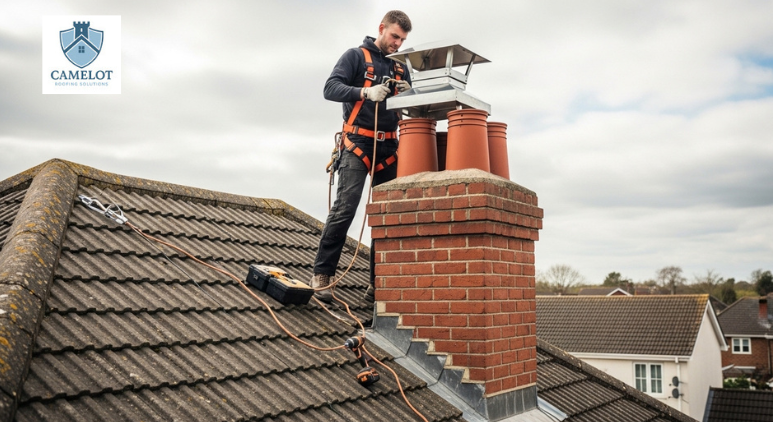
If any part of the chimney remains after the breast has been removed, the flue must be properly capped and ventilated to comply with Building Regulations. Professionals install a weatherproof cap, usually made of terracotta or stainless steel, at the top of the chimney stack to prevent rainwater from entering. At the base of the flue, a ventilation grille is installed with a minimum opening size of 6,500 mm² to allow air to circulate.
Proper ventilation is essential in any chimney removal project in the UK, as poor sealing or exposure can lead to water ingress. If you’re dealing with moisture problems, it’s important to understand the common causes and solutions for chimney leaks in the UK.
It also helps prevent the accumulation of dangerous gases, such as carbon monoxide. This step ensures the remaining chimney structure remains safe and functional.
Step 10: Make Good the Walls, Floor, and Ceiling
After the structural work has been completed and inspected, the next stage is to restore the area to a finished condition. Any gaps in the walls are filled with brick or blockwork and then plastered to create a smooth surface that matches the rest of the room.
In older properties, lime plaster is often used to maintain breathability and prevent damp issues. The ceiling is repaired by installing plasterboard where the chimney previously passed through, followed by a skim coat of finishing plaster to create a seamless finish.
The floor is also repaired or replaced, depending on how the chimney was constructed, with efforts made to match the existing flooring as closely as possible. This stage is where the space is transformed from a construction site back into a usable part of the home.
Step 11: Final Building Control Inspection
The final step of the process is a Building Control inspection, which takes place once all work has been completed. During this inspection, a Building Control officer will assess whether the work has been carried out in accordance with the approved plans and meets all UK Building Regulations.
They will check the RSJ installation, overall structural stability, and the quality of the completed work. If everything is satisfactory, they will issue a Completion Certificate, which serves as official proof that the work has been completed safely and legally. This certificate is extremely important and should be kept safely, as it will be required when selling, remortgaging, or valuing your property.
Now that you understand the full process, it’s clear that chimney breast removal is a highly technical job that requires precise planning, structural expertise, and strict compliance with UK Building Regulations. One small mistake can lead to serious structural issues, which is why professional support is so important.
Our roofing contractors team specialises in chimney services across London & surrounding areas and can handle everything from structural assessments to full Building Regulations compliance and finishing work. Get in touch today for a free consultation and quote, and let our experts take care of your chimney breast removal with complete peace of mind.
Common Mistakes to Avoid
Many homeowners make costly mistakes. Avoid these:
- Starting work without approval
- Removing support before installing the RSJ
- Ignoring Party Wall rules
- Hiring unqualified builders
- Skipping structural calculations
These mistakes can significantly increase your chimney removal cost UK and lead to serious damage or legal issues.
Conclusion
Removing a chimney breast is a complex structural job that must follow each step carefully to ensure safety and compliance. From structural engineering to final inspection, every stage is essential to the project’s success.
When done correctly by professionals, chimney breast removal can create more space, improve your home’s layout, and add long-term value, while keeping your property safe and structurally sound.
Ready to transform your space? Contact our local roofing contractors in Hackney today and let us handle your chimney breast removal from start to finish.
How long does chimney breast removal take?
A standard chimney breast removal project in the UK usually takes 3 to 7 days, depending on complexity, property type, and whether additional work, such as plastering and finishing, is included.
Can I remove the chimney breast without removing the stack?
Yes, it is possible to carry out a chimney breast removal while leaving the chimney stack in place. However, the remaining structure must be properly supported with steel beams or gallows brackets, as specified by a structural engineer.
What is the difference between chimney breast removal and chimney stack removal?
Chimney breast removal involves removing the internal part of the chimney inside the house, while chimney stack removal refers to removing the external portion above the roofline. Both require different levels of structural work and permissions.
How much does it cost to remove a chimney breast in the UK?
The chimney breast removal cost in the UK typically ranges from £1,500 to £4,500, depending on the size, location, and whether structural support, such as an RSJ, is required. Costs may increase if you’re also carrying out a full chimney stack removal or need Party Wall agreements and structural engineer reports.
