
Flat roofs are common on extensions, garages, porches, and commercial buildings across the UK. While they offer a modern look and efficient use of space, they can sometimes develop problems such as cracks, leaks, or pooling water. Knowing how to repair a flat roof can help you prevent small issues from turning into expensive structural damage.
This guide explains the most common causes of flat roof damage, the steps involved in flat roof repair, and when it’s best to call professional roofers in Hackney.
Common Signs Your Flat Roof Needs Repair
Before learning how to repair a flat roof, it’s important to recognise the warning signs of damage. Catching these problems early can save you time and money and make repairing flat roofs much easier.
Typical signs include:
- Water stains on ceilings or interior walls
- Visible cracks or splits in the roofing material
- Ponding water that remains for more than 48 hours
- Blistering or bubbling in felt or membrane roofs
- Loose flashing around edges or roof penetrations
- Damp insulation beneath the roof covering
If you notice any of these issues, it may be time to consider a flat roof repair before the damage worsens.
What Causes Damage to Flat Roofs?
Flat roofs experience constant exposure to the UK’s weather conditions. Several factors can contribute to deterioration and lead to the need for flat roofing repair.
Weather Exposure
Heavy rain, frost, UV rays, and temperature fluctuations can weaken roofing materials over time.
Poor Drainage
Flat roofs rely on proper drainage systems. When drains become blocked, standing water can gradually damage the roof surface.
Ageing Roofing Materials
Most flat roofs last between 10 and 25 years, depending on the material used. As the roof ages, cracks and leaks become more likely.
Installation Issues
Poor workmanship or incorrect installation can lead to premature roof failure and frequent repair needs.
Weather, poor drainage, ageing materials, and installation issues are all common causes of flat roof problems. If you’re unsure whether your roof can be repaired safely, our flat roofing service can assess the damage and recommend the best solution.
How to Repair a Flat Roof: Step-by-Step
Important safety note: Working at height carries serious risks. If your flat roof is above ground floor level, or if the damage is extensive, always hire a qualified roofer. The steps below are intended to give you an understanding of the repairing a flat roof process and help you have informed conversations with contractors.
Step 1: Inspect the Roof Safely
Start by carefully accessing the roof, ideally using a ladder with a stabiliser, and never in wet or icy conditions. Walk gently across the surface and look for:
- Visible splits, cracks, tears, or holes
- Blistered or bubbled sections
- Lifted or cracked flashing around edges, walls, and drains
- Areas of standing water or discolouration
- Damaged or blocked drainage outlets
Take photos of everything you find. This helps when getting quotes and tracking the extent of the damage over time.
Step 2: Identify the Source of the Leak (if applicable)
Leaks rarely appear directly above where the water is entering inside. Water travels along joists, decking, and insulation before it becomes visible. To find the true source:
- Look for the highest point of water staining on the ceiling as a starting point
- Inspect any roof penetrations (vents, pipes, skylights) and flashing first. These are the most common failure points
- Check seams and edges carefully
Step 3: Clean and Prepare the Damaged Area
Before any repair material will bond properly, the surface must be:
- Dry: allow at least 48 hours of dry weather before attempting repairs
- Clean: brush away debris, moss, and dirt
- Sound: remove any loose or flaking material back to a stable surface
For felt roofs, use a wire brush and scraper. For EPDM, wipe the area with EPDM cleaner or isopropyl alcohol. For GRP, grind back cracked sections with an angle grinder.
Step 4: Apply the Appropriate Repair
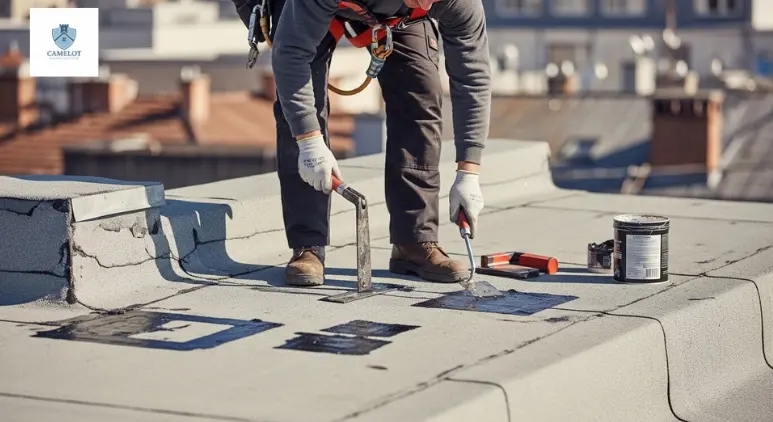
For felt flat roof repairs: Cut a patch of compatible felt material slightly larger than the damaged area. Warm the underside with a blowtorch until the bitumen becomes tacky (or use a cold-bond adhesive if using a non-torch approach). Press firmly into place and seal the edges with bitumen lap tape or compound.
For EPDM flat roof repairs: Apply EPDM primer to the cleaned area and allow to flash off. Cut an EPDM patch to size. Apply bonding adhesive to both surfaces, allow to become tacky, then press firmly together, starting from the centre and working outwards to remove air. Roll firmly with a seam roller. Apply lap sealant around all edges.
For GRP flat roof repairs: Mix your GRP laminating resin and hardener to manufacturer’s ratio. Apply to the damaged area, lay fibreglass matting, and stipple resin through using a brush to saturate fully. Allow to cure, then apply topcoat resin mixed with pigment to match. Sand lightly when cured.
Each material requires a slightly different method when repairing flat roofs, so identifying your roof type is essential.
Step 5: Seal and Inspect Flashings
Many flat roof leaks originate at the flashing, the metal or lead strips that seal the junction between the roof and walls. If flashing is lifting or cracked:
- Brush away debris and old sealant
- Re-bond with appropriate sealant (lead, EPDM-compatible, or bitumen-based depending on your roof type)
- For lead flashing, dress it back into mortar joints and seal with a suitable pointing compound
Step 6: Check Drainage
Once repairs are complete, ensure all drainage outlets and gutters are clear. Blocked drains are one of the most common causes of flat roof deterioration, standing water puts enormous pressure on any membrane.
Step 7: Document and Monitor
Keep a record of any repairs made, including the date, materials used, and photos. This is particularly useful when dealing with warranty claims or future roofing contractors. Monitor the repaired area after the first significant rainfall to confirm the fix has held.
Types of Flat Roof Materials and How Repairs Differ
Understanding your roofing material helps determine the correct flat roof repair approach.
Felt (Built-Up Bitumen) Flat Roofs
The most common type found on older London properties. Felt roofs consist of layers of bitumen-impregnated felt torched or bonded together. They’re affordable but have a shorter lifespan (10–15 years) than modern alternatives.
Common repairs: Patching with matching felt and torch-on bitumen; re-sealing splits with bitumen compound; full re-felting for widespread damage.
EPDM (Rubber) Flat Roofs
EPDM (Ethylene Propylene Diene Monomer) is a synthetic rubber membrane becoming increasingly popular in London. It’s highly durable, UV-resistant, and can last 30–50 years with proper installation.
Common repairs: Bonding patches using EPDM-specific adhesive; re-sealing seams with lap sealant; cleaning and re-coating with EPDM primer and adhesive.
GRP (Fibreglass) Flat Roofs
GRP roofs are formed by applying fibreglass matting saturated in resin. They’re seamless, strong, and very waterproof and growing in popularity for modern extensions.
Common repairs: Grinding back the damaged area, applying new fibreglass matting and topcoat resin; re-sealing around upstands and trims.
TPO and PVC Single-Ply Membranes
Used more commonly on commercial properties, these thermoplastic membranes are welded at the seams using hot air. Repairs typically require specialist equipment to re-weld or patch damaged sections.
When to Repair vs. When to Replace a Flat Roof
Not every flat roof problem calls for a full replacement, but not every problem can be patched either. Here’s a general guide:
Repair is usually sufficient when:
- The damage is isolated to a small area (less than 20–25% of the roof surface)
- The roof is relatively new (under 10 years old)
- The decking beneath is sound and dry
- The membrane is otherwise in good condition
Replacement is usually the better option when:
- The roof is over 20 years old and showing widespread deterioration
- Multiple leaks are appearing in different areas
- The decking is rotting or structurally compromised
- Repairs have been made repeatedly to the same areas
- You’re planning a renovation or extension that requires new insulation
At Camelot Roofing Solutions, we always recommend an honest assessment rather than short-term patching on a roof that’s past its useful life. Ultimately, a new flat roof installed properly will save you money over repeated repair bills.
When to Call Professional Roofers
While minor repairs can sometimes be handled by homeowners, many flat roof issues require expert knowledge and proper equipment.
You should consider hiring professional roofers if:
- The leak source is difficult to locate
- The roof structure is damaged
- Large areas of roofing material are deteriorating
- Water damage has spread to the interior
Even experienced DIYers will reach a point where professional help is needed. If you’re in London, our local roofers in Hackney can carry out full inspections, repairs, and replacements safely and efficiently.
Conclusion
A well-maintained flat roof can protect your property for decades. Whether you’re dealing with a small leak or assessing more serious damage, acting quickly and choosing the right repair method is essential. Regular inspections and proactive flat roof maintenance can prevent expensive repairs and extend the lifespan of your roof.
If you’re in London and nearby areas like hackney and need expert help with flat roof repairs London, Camelot Roofing Solutions is here to help. We offer free, honest assessments and carry out all types of flat roof repairs to the highest standard.
Contact us today for a free quote or call +442073057365, we’re available Monday to Sunday, 8am to 6pm.
FAQs
How long does a flat roof repair take?
Most small to medium flat roof repairs take between half a day and one full day. Larger repairs or partial re-decking may take 2–3 days. Emergency leak patches can sometimes be completed on the same day.
Can a flat roof be repaired in winter?
Yes, though conditions matter. Cold temperatures can affect adhesive and resin curing times. Most materials require a minimum temperature of around 5°C to bond properly. Many torch-on felt repairs can still be carried out in colder weather. GRP repairs are more sensitive to temperature and humidity. We recommend avoiding repair work in frost, heavy rain, or strong winds.
Is felt or EPDM better for a flat roof?
EPDM offers a significantly longer lifespan (30–50 years vs 10–20 for felt), better UV resistance, and fewer seams to fail. However, felt is cheaper to install upfront. For new installations, we typically recommend EPDM or GRP for their durability and long-term value.
How much does it cost to repair a flat roof in London?
Small repairs typically start from around £150–£300. More significant repairs or partial re-felting can range from £300 to £800 or more. Full flat roof replacements in London generally cost £70–£120 per m². For an accurate quote, contact Camelot Roofing Solutions for a free assessment.
