
If you’re planning a flat roof for your home, extension, garage, or commercial building, understanding the different flat roof material types in the UK is essential. Each roofing material varies in durability, installation cost, lifespan, and maintenance requirements. Choosing the wrong option can lead to leaks, frequent repairs, and higher long-term expenses. Considering the UK’s challenging weather conditions, such as heavy rain, frost, wind, and temperature changes, selecting a suitable flat roof covering is crucial for protecting your property and ensuring long-term performance.
As expert roofers in Hackney, London, we’ve worked on countless flat roofs across residential and commercial projects. In this guide, we’ll share our professional insights on flat roof material types in the UK, including EPDM, GRP, torch-on felt, PVC/TPO membranes, liquid roofing, zinc, asphalt, and green roofs. You’ll learn about their lifespan, pros, cons, cost, and maintenance, helping you make a confident, long-term decision.
Types of Flat Roof Materials
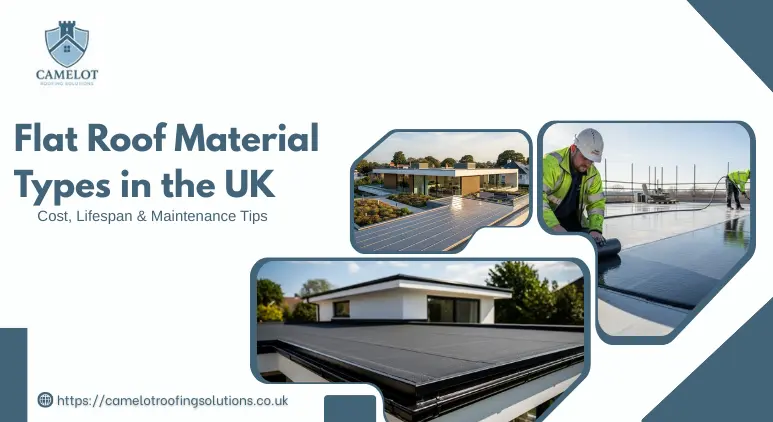
1. EPDM Rubber Roofing (Ethylene Propylene Diene Monomer)
EPDM is a synthetic rubber membrane widely regarded as the long-lasting flat roof material for most residential properties. Its flexibility and durability make it ideal for new builds and refurbishments.
Lifespan: 30–50 years
Cost: £80–£100 per m² installed
Pros:
- Extremely durable, flexible, and waterproof
- Seamless installation reduces leaks
- Resistant to UV, wind, and heavy rain
- Low maintenance and recyclable
Cons:
- Higher upfront cost than felt
- Requires professional installation
Maintenance:
- Annual inspection for ponding water, debris, and minor tears
- Check flashing and joints around edges
- Clean with mild soap and water
Best For: Home extensions, dormers, garages, Long-term investment properties
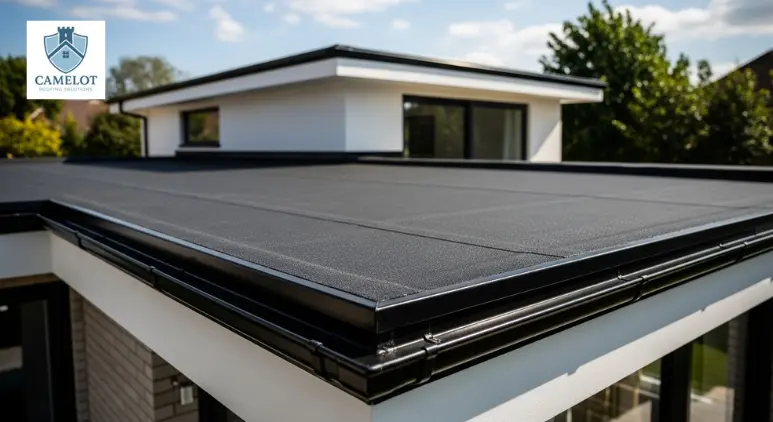
2. GRP Fiberglass Roofing
GRP (Glass Reinforced Plastic) is a rigid, seamless, and waterproof flat roof covering option popular for modern homes.
Lifespan: 25–50 years
Cost: £70–£150 per m²
Pros:
- Fully waterproof and impact-resistant
- Modern aesthetic finish
- Suitable for complex roof shapes
Cons:
- Can crack if poorly installed
- Repairs are visible
Maintenance:
- Inspect seams, edges, and corners annually
- Remove moss, algae, and debris
- Repair minor cracks with resin kits
Best For: Bay roofs, balconies, modern properties
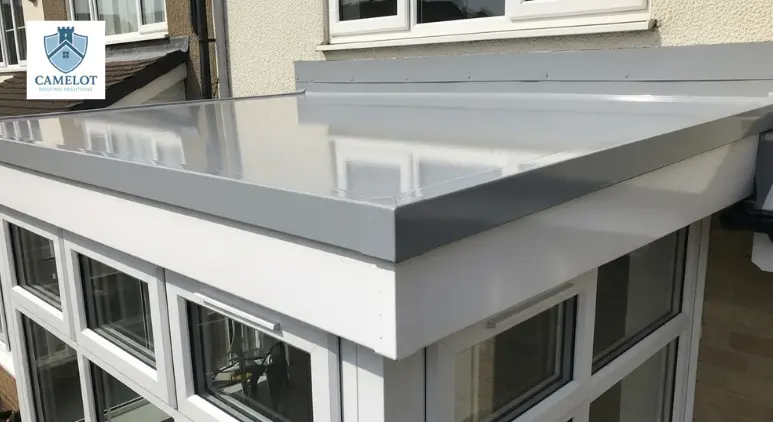
3. Torch-On Felt Roofing
Torch-on felt is a traditional, cost-effective flat roofing material widely used in the UK.
Lifespan: 15–25 years
Cost: £60–£120+ per m²
Pros:
- Affordable and quick to install
- Suitable for garages, sheds, and small roofs
Cons:
- Shorter lifespan
- Requires regular maintenance
- Prone to leaks
Maintenance:
- Inspect every 2–3 years for bubbling, cracks, or splits
- Patch small tears immediately
- Clear debris to prevent pooling
- Avoid walking unless necessary
Best For: Budget projects or secondary roofs
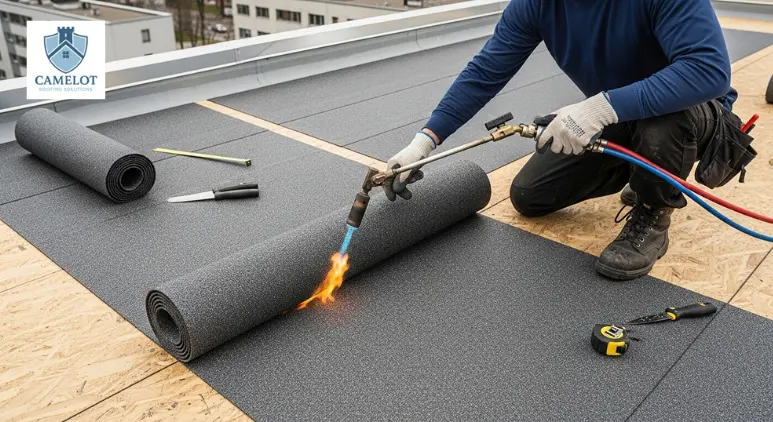
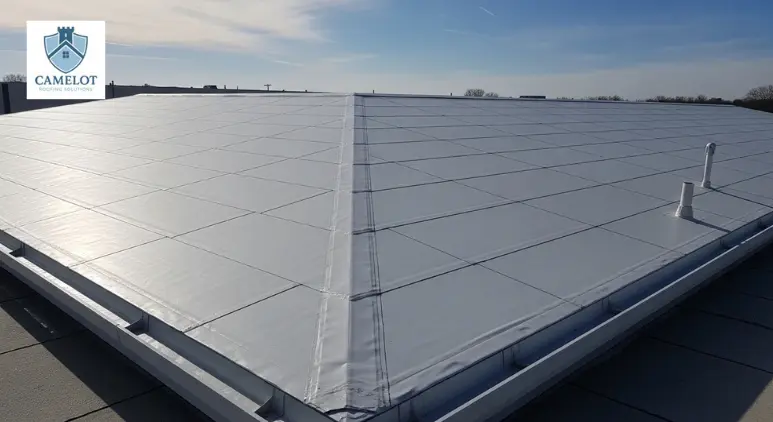
4. Single-Ply Membranes (PVC / TPO)
Single-ply membranes are lightweight, flexible, and often used for commercial flat roofs or large residential projects.
Lifespan: 20–35 years
Cost: £45–£100 per m²
Pros:
- Excellent waterproofing
- Resistant to UV and chemicals
- Flexible for large or complex roofs
Cons:
- Professional installation required
- Less visually appealing for some residential homes
Maintenance:
- Annual inspection of seams, joints, and penetrations
- Remove debris to prevent ponding
- Repair minor holes with sealant
Best For: Commercial buildings and large residential roofs
5. Liquid Roofing Systems
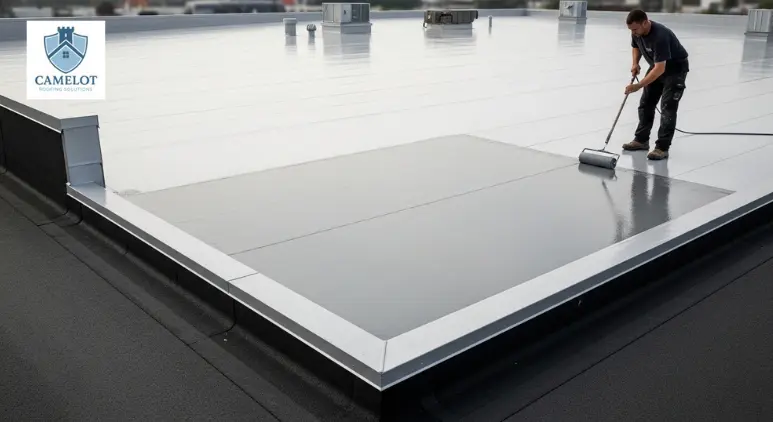
Liquid roofing involves applying a liquid membrane that cures into a seamless waterproof layer, ideal for irregular or complex roofs.
Lifespan: 20–25 years
Cost: £40–£90 per m²
Pros:
- Seamless and flexible
- Can be applied over existing roofs
- Works on awkward roof shapes
Cons:
- Weather-sensitive during installation
- Longer downtime
Maintenance:
- Annual inspection for cracks or blisters
- Reapply coating when necessary
- Remove debris and check edges and flashings
Best For: Refurbishments or roofs with complex details
6. Zinc Flat Roofing
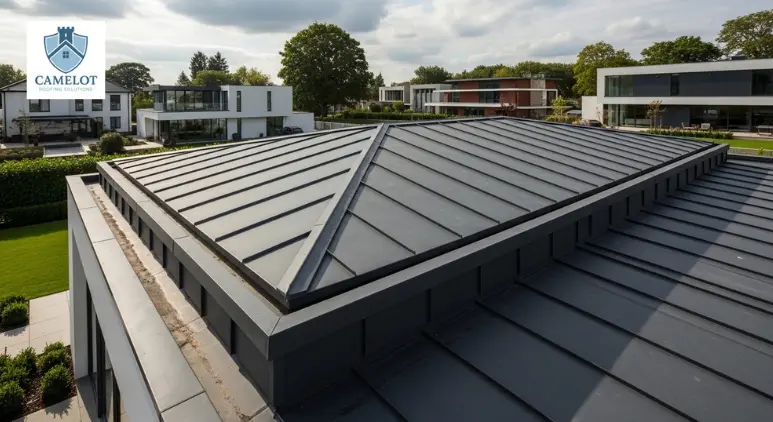
Zinc flat roofing is a premium, durable material often used in high-end architectural projects.
Lifespan: 60–100 years
Cost: £70–£140 per m²
Pros:
- Extremely long-lasting
- Low maintenance
- Modern aesthetic finish
- Recyclable
Cons:
- High initial cost
- Specialist installation required
Maintenance:
- Inspect joints and seams every few years
- Clear gutters of debris
- Rarely requires repair unless physically damaged
Best For: Luxury homes, architectural projects
7. Mastic Asphalt Roofing
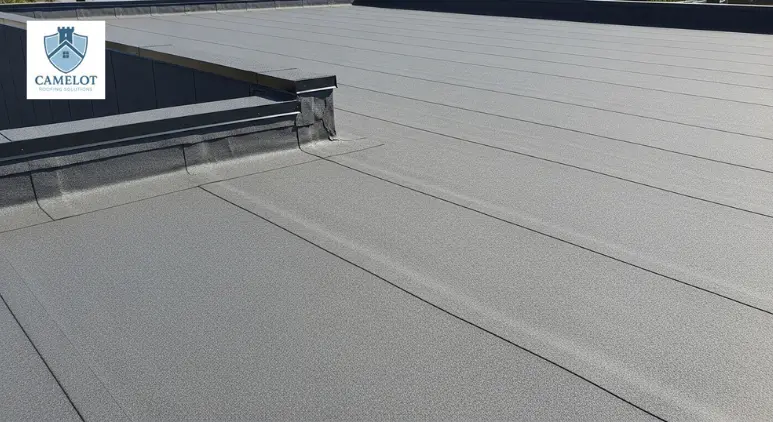
Mastic asphalt roofing is durable, heavy, and often used in older buildings or roofs with foot traffic.
Lifespan: 50+ years
Cost: £25–£60 per m²
Pros:
- Waterproof and durable
- Suitable for foot traffic
Cons:
- Heavy and inflexible
- Less modern aesthetic
Maintenance:
- Annual inspection for cracks and ponding
- Remove debris
- Minor repairs with asphalt fillers
- Maintain proper drainage
Best For: Older properties or structural-specific roofs
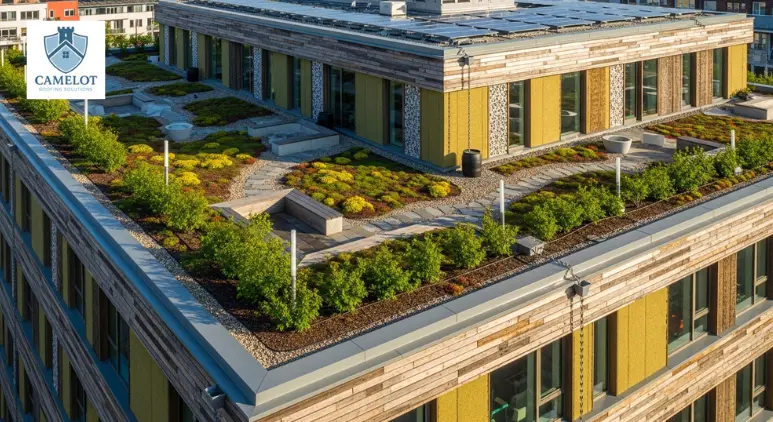
8. Green Roofing (Eco-Friendly / Living Roofs)
Green roofs are covered with vegetation, providing insulation, energy efficiency, and environmental benefits.
Types:
- Extensive: Shallow soil, low-maintenance plants like sedum
- Intensive: Deep soil, supports shrubs and small trees
Lifespan: 30–50 years (membrane may last longer)
Cost: £50–£200 per m²
Pros:
- Excellent insulation and energy efficiency
- Reduces stormwater runoff
- Protects waterproof membrane from UV
- Supports biodiversity
Cons:
- High upfront cost
- Requires structural support
- Intensive systems need regular care
Maintenance:
- Annual inspection of the waterproof membrane
- Occasional weeding and plant care
- Check drainage and irrigation
- Remove dead leaves and monitor plant health
Best For: Eco-conscious homeowners, urban and commercial properties
Flat Roof Material Types: Detailed Comparison
| Material | Lifespan | Cost (per m²) | Maintenance | UK Climate Suitability | Best Use Case |
| EPDM Rubber | 30–50 yrs | £80–£100 | Low – annual inspection | Excellent | Home extensions, garages, dormers, long-term investment properties |
| GRP Fibreglass | 25–50 yrs | £70–£150 | Low – inspect seams annually | Very Good | Modern homes, balconies, bay roofs |
| Torch-On Felt | 15–25 yrs | £60–£120+ | Medium – patch/inspection every 2–3 years | Fair | Budget projects, secondary roofs, garages, sheds |
| Single-Ply Membranes (PVC/TPO) | 20–35 yrs | £45–£100 | Low – inspect joints annually | Very Good | Commercial buildings, large residential roofs |
| Liquid Roofing | 20–25 yrs | £40–£90 | Low – inspect & reapply coating | Good | Refurbishments, complex roofs |
| Zinc | 60–100 yrs | £70–£140 | Very Low – inspect joints every few years | Excellent | Luxury homes, architectural projects |
| Mastic Asphalt | 50+ yrs | £25–£60 | Medium – inspect for cracking | Good | Older properties, foot traffic roofs |
| Green Roofing | 30–50 yrs | £50–£200 | Medium – annual inspection & plant care | Very Good | Eco-conscious homeowners, urban buildings, commercial properties |
Conclusion
Choosing the right flat roof material depends on your budget, property type, and the UK climate. Whether you opt for cost-effective torch-on felt, durable EPDM, GRP, PVC/TPO membranes, or eco-friendly green roofs, each flat roof covering option offers unique benefits, lifespan, and maintenance requirements to suit your home or commercial property.
Before choosing the best flat roof material for your home, it’s always wise to get expert advice. If you’re looking for professional flat roofing services in Hackney and surrounding areas, contact Camelot Roofing Solutions Ltd today for a free consultation and expert guidance on the long-lasting flat roof materials.
FAQs
What is the best material for a flat roof in the UK?
EPDM rubber roofing is widely considered the best flat roof material in the UK due to its durability, waterproofing, low maintenance, and long lifespan.
What is the longest-lasting flat roof material?
Zinc and EPDM are the longest-lasting flat roof materials, with lifespans of 60–100 years for zinc and 30–50 years for EPDM
What is the cheapest flat roof replacement?
Torch-on felt is the most cost-effective flat roof replacement in the UK, offering affordable installation for garages, sheds, and budget-conscious projects.
What is the best covering for a flat roof?
The best flat roof covering depends on your needs, but EPDM, GRP, and PVC/TPO membranes offer excellent waterproofing and durability for most residential and commercial roofs.
