
Choosing the right roofing material is one of the most important decisions for any homeowner or builder. Your roof protects everything beneath it from weather, wear, and time, so understanding the types of roofing materials available can help you make the best choice for durability, style, and cost.
As trusted roofers in London, we bring years of experience working with all types of roofing materials. In this guide, we explain the different types of roofing materials, from classic asphalt shingles, clay, and slate to modern metal, solar, and green roofs. You’ll find clear insights on cost, lifespan, pros and cons and this guide will help you choose the best roofing material for your property with confidence.
Different Types of Roof Materials In the UK
1. Asphalt Shingles
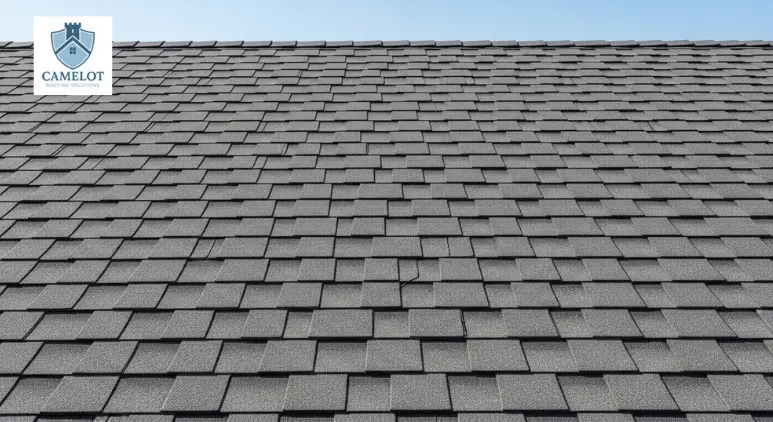
Asphalt shingles are the dominant roofing material in North America, but have a much smaller market share in the UK. They are, however, available and used particularly on properties with American-influenced architecture, log cabins, and some garden buildings.
Types:
- 3-Tab Shingles – Flat, uniform appearance.The most basic and affordable type.
- Architectural (Dimensional) Shingles-Thicker, multi-layered construction with a more textured, dimensional appearance. Better weather performance and aesthetics than 3-tab.
- Impact-Resistant Shingles– Class 4 hail-rated products, increasingly relevant as UK weather becomes more extreme.
- Cost: between £30 and £85 per square metre
- Lifespan: between 15 and 30 years
Pros:
- Affordable
- Wide range of colours
- Relatively easy to repair
- Architectural shingles offer a distinctive appearance not achievable with tiles or slates
Cons:
- Not a traditional UK roofing material, it can look out of place on many British homes
- Shorter lifespan than tiles, slates, or metal
- Less well understood by UK roofers, finding experienced installers can be harder
- Not generally acceptable in conservation areas or on listed buildings
Best For: Log cabins, American-style self-builds, garden rooms, and homeowners who specifically want the cedar or architectural shingle aesthetic.
2. Wood Shingles and Shakes
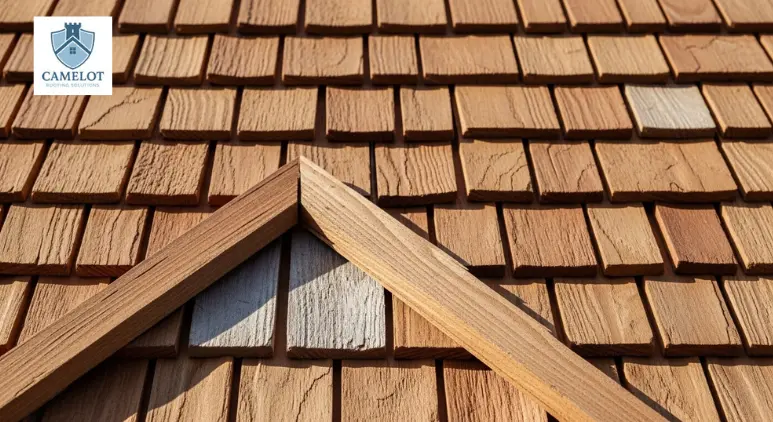
Timber roofing has a long history in Britain, from the oak shingles of medieval churches to the cedar-clad barns of rural Surrey. Wood shingles and shakes remain a niche but genuinely beautiful roofing option for the right property in the right setting.
Shingles vs. Shakes: Shingles are sawn on both faces for a smooth, uniform, tapered profile. Shakes are split, either hand-split or split-and-sawn, for a rougher, more rustic texture. Both are most commonly produced from Western Red Cedar, which contains natural oils providing inherent resistance to moisture and decay.
- Cost: £50 to over £100 per m² only materials cost
- Lifespan:30–50 years
Pros:
- Completely unique natural aesthetic, warm, textural, and deeply characterful
- Naturally good thermal insulation
- Biodegradable and low environmental impact when sourced responsibly from certified forests
- Beautiful on rural, woodland, and heritage-influenced properties
- Can be treated to achieve Class B fire retardancy
Cons:
- Susceptible to rot, mould, and lichen growth in the damp British climate without regular treatment
- Requires annual inspection and periodic preservative treatment, the highest maintenance of any common type of roofing material
- Not permitted in many conservation areas or on listed buildings without specific consent
- Fire risk without treatment, check local planning and building regulations carefully
Best For: Rural properties, woodland settings, barn conversions, and heritage-influenced buildings in temperate UK locations. Excellent on holiday lets and retreats where the natural aesthetic is a genuine selling point.
3. Concrete Roof Tiles
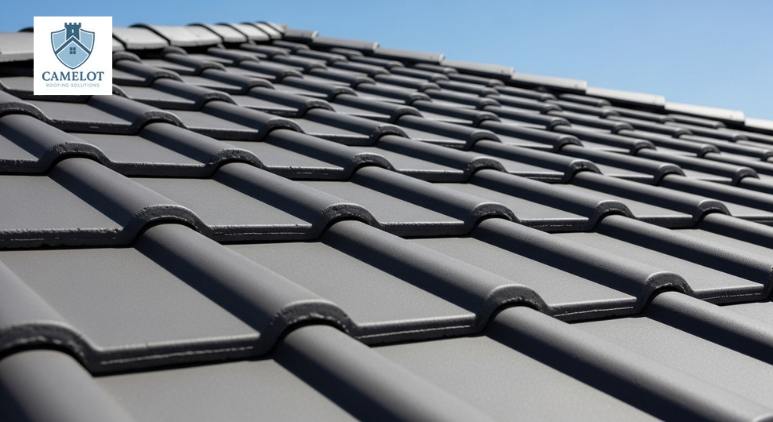
Concrete roof tiles are the most widely used roofing material in the UK today and have been since the 1960s. Walk down any suburban street in Britain and the chances are the majority of roofs will be covered in either concrete interlocking tiles or concrete plain tiles. They’re popular for good reason, they’re affordable, widely available, genuinely durable, and compatible with the vast majority of British roof pitches.
Types of Concrete Tile:
Interlocking Concrete Tiles
The workhorse of British roofing. Large format tiles that overlap and interlock along their edges, requiring fewer tiles per square metre and making installation significantly faster. Suitable for pitches as low as 17.5° in some profiles.
Concrete Plain Tiles
Smaller, flatter tiles installed in a double-lap pattern (each tile overlapped by two above it). They replicate the appearance of traditional clay plain tiles at a lower cost. Require a pitch of at least 35°.
Concrete Pantiles
S-shaped profiled tiles with a single lap. Popular in East Anglia and parts of Yorkshire, where the pantile is a regional vernacular tradition. Suitable from around 22.5°.
- Cost: £75 and £150 per square metre (m²)
- Lifespan: 30 to 50 years.
Pros:
- Most affordable tile roofing option in the UK
- Wide variety of profiles, textures, and colours
- Good weather resistance for the British climate
- Minimal maintenance beyond occasional moss treatment and gutter clearing
- Widely available, any competent roofer can work with them
Cons:
- Shorter lifespan than natural slate or clay
- Can support moss, lichen, and algae growth in damp conditions (requires periodic treatment)
- Colour can fade over decades
- Heavier than some alternatives, may need structural checks on older properties
- Not always accepted in conservation areas
Best For: The majority of UK new builds, extensions, and re-roofing projects where cost and practicality are the primary concerns.
4. Clay Roof Tiles
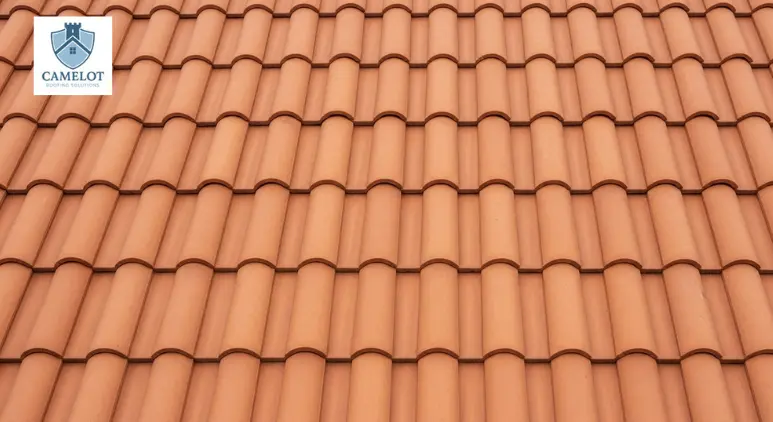
Clay tiles have been covering British rooftops for centuries. From the red pantiles of Norfolk and Suffolk to the warm plain tiles of Kent and Sussex, clay tiles are deeply woven into the architectural fabric of English vernacular buildings.
Types of Clay Tile:
Clay Plain Tiles: The classic British plain tile, typically 265mm × 165mm, installed in a double-lap pattern. The standard for traditional pitched roofs in southern and eastern England. Require a minimum pitch of 35°–40°.
Clay Pantiles: S-shaped single-lap tiles with strong regional associations in East Anglia, Lincolnshire, and the North East. Characteristic warm red-orange colour. Suitable from approximately 30°.
Clay Rosemary Tiles: Smaller than standard plain tiles, named after the manufacturer Rosemary. Extremely sought-after in the South East for period property restorations.
Handmade Clay Tiles: Individually crafted with natural variation in colour and texture. The most expensive option, but the most authentic for listed buildings and sensitive conservation area work.
- Cost: £125 to £275 per square metre(Labour + Materials)
- Lifespan: 50 to 100 years. Many Victorian clay tile roofs are still performing perfectly today
Pros:
- Authentic, traditional British aesthetic, irreplaceable on period properties
- Excellent lifespan, significantly longer than concrete equivalents
- Natural variation in colour creates a warm, characterful appearance that improves with age
- Class A fire resistance
- Highly resistant to frost, salt air, and sustained rainfall
- Low maintenance once well-bedded and pointed
Cons:
- More expensive than concrete tiles
- Heavier than many alternatives, structural capacity check often required
- Quality varies between manufacturers, sourcing well is critical
- Matching original tiles for repairs and extensions can be challenging
- Requires a minimum pitch, not suitable for shallow or flat roofs
Best For: Period properties, conservation areas, listed buildings, and homeowners who want the authentic British roofscape aesthetic. Especially appropriate for Victorian, Edwardian, and Arts and Crafts style properties.
5. Natural Slate
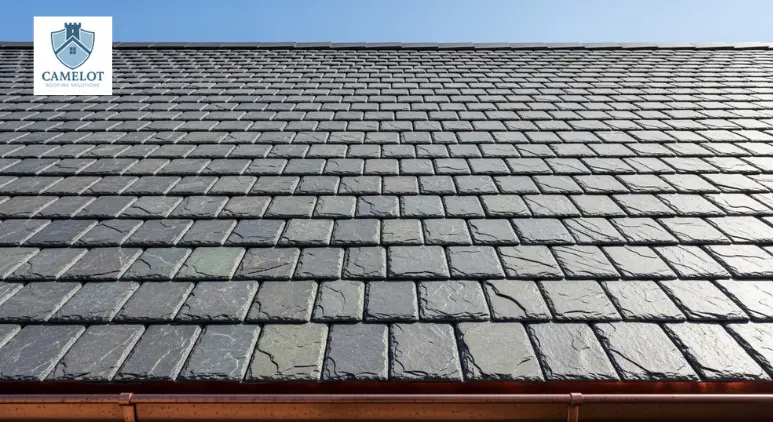
If clay tiles are the heart of southern English roofing tradition, natural slate is the soul of roofing across Wales, Scotland, Northern England, and Ireland. Welsh slate in particular, quarried from Penrhyn, Dinorwic, and Ffestiniog, is recognised the world over as the finest natural roofing slate available.
Natural slate is a metamorphic rock, formed over hundreds of millions of years under intense geological pressure. Split into thin tiles, it creates a roofing material that is naturally waterproof, completely non-combustible, immune to rot and insects, and genuinely beautiful. A good natural slate roof, properly maintained, will quite simply never need replacing in your lifetime.
UK Slate Sources:
- Cost: £60 and £150+ per m²(materials only)
- Lifespan: 75 to 200 years.
Pros:
- The longest-lasting natural roofing material available anywhere in the world
- Timeless, handsome appearance that genuinely improves with age and weathering
- Completely fireproof, waterproof, and frost-resistant
- Virtually zero maintenance required beyond periodic inspection
- Highly valued by estate agents and buyers, a natural slate roof is a genuine selling point
- Fully compatible with planning requirements in conservation areas, National Parks, and listed buildings
Cons:
- Higher upfront cost than concrete or fibre cement alternatives
- Requires a qualified and experienced slater to install properly, not all roofers have this skill
- Matching original slate for repairs and extensions requires sourcing care
- Brittle under direct foot traffic, must be walked correctly during maintenance
- Reclaimed slate requires careful grading, poor quality reclaimed material is a false economy
Best For: Any property where quality, longevity, and appearance matter. Essential for listed buildings and conservation areas. The single best long-term investment in pitched roofing available to UK homeowners.
6. Fiber Cement Slate
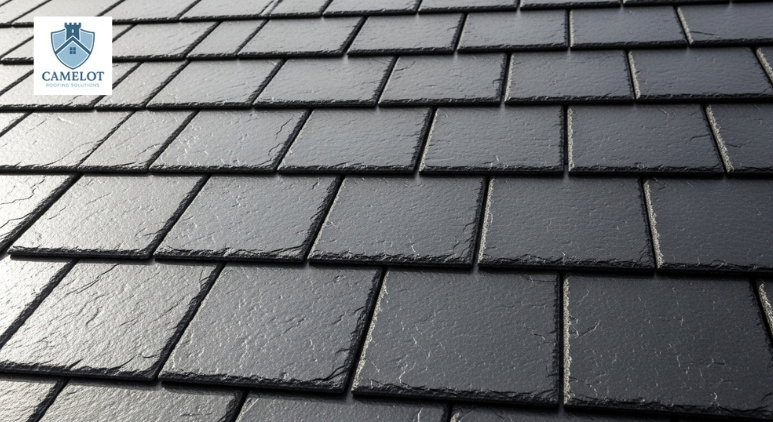
Fiber cement slates, sometimes called artificial slates or fiber slates are manufactured from a mixture of cement, sand, and cellulose or synthetic fibers. They are designed to replicate the appearance of natural slate at a significantly lower price point and with greater dimensional consistency.
- Cost: between £18 and £30 per meter square(material cost only)
- Lifespan: last 50 to 60 years
Pros:
- Substantially more affordable than natural slate
- Consistent dimensions, easier and faster to install than natural slate
- Available in a range of colours and surface textures
- Good frost, fire, and weather resistance
- Suitable for conservation area work in some locations
- Widely available throughout the UK
Cons:
- Does not have the depth of character or natural variation of genuine slate
- Shorter lifespan than natural slate
- Early fibre cement products (pre-1990s asbestos-containing types) require specialist removal, not applicable to modern products
- Can be more prone to algae and moss growth than natural slate
- Not accepted as a substitute for natural slate on listed buildings or in strict conservation areas
Best For: Re-roofing projects where natural slate aesthetics are desired but the budget is a significant constraint. Good choice for new builds in areas that permit artificial slates.
7. Metal Roofing
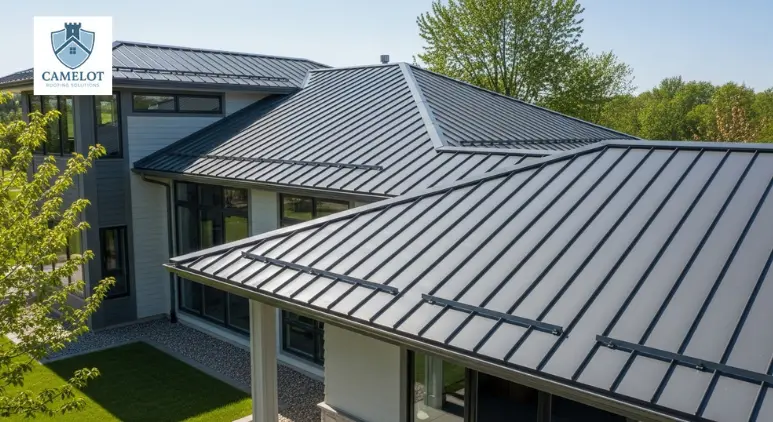
Metal roofing has an extraordinarily long tradition in the UK, the lead roofs of medieval cathedrals, the copper domes of Georgian civic buildings, and the zinc roofing of Victorian terraced bay windows are all testament to the enduring performance of metal as a modern roofing material. Today, metal roofing has been transformed into a thoroughly modern, high-performance product available in a wide range of metals, profiles, and finishes.
Metal Options Available in the UK:
Zinc: The premium choice for contemporary UK residential and commercial roofing. Zinc is self-healing, small scratches and surface damage are repaired naturally by the material’s own oxidation process. Develops a beautiful natural patina over time (blue-grey to dark graphite). Extremely long-lasting.
Lead: Britain’s most traditional metal roofing material, used continuously for over 2,000 years. Superbly flexible, ideal for complex rooflines, valleys, flashings, and detailing. Heavy but essentially permanent.
Copper: Strikingly beautiful, developing from bright penny-copper to rich verdigris green over decades. The choice of prestige buildings, churches, and high-end contemporary architecture.
Aluminium: Lightweight, corrosion-resistant, and excellent value. Particularly suited to coastal properties. Available in a vast range of colours with PVDF coatings.
Steel (Coated/Pre-Patinated): The most affordable metal roofing option. Available as standing seam panels, profiled sheets, or tile-effect products. Usually supplied with Galvalume or colour-coated polyester finish.
- Cost: £70 to £150 per square metre, depending on metal and profile
- Lifespan:40 to 70 years
Pros:
- Exceptional longevity, potentially the very last roof you ever install
- Outstanding weather resistance, handles the British climate superbly
- Lightweight compared to tile or slate
- Very low maintenance, occasional inspection, and gutter clearing is all that’s required
- Fully recyclable at the end of life
- Suitable for a wide range of pitches, including very low slopes
- Modern zinc and copper develop beautiful natural patinas over time
Cons:
- Higher upfront cost than tiles or slates for most options
- Can be noisy during heavy rainfall without proper insulation, not an issue with standing seam systems, where insulation is incorporated
- Requires experienced metalwork contractors, not all roofers work in zinc or lead
- Thermal expansion and contraction must be accommodated in the design
Best For: Contemporary and modern architecture, barn conversions, self-builds, heritage restorations (lead and copper), coastal properties (aluminium), and any homeowner prioritising exceptional long-term value.
8. EPDM-Rubber Roofing
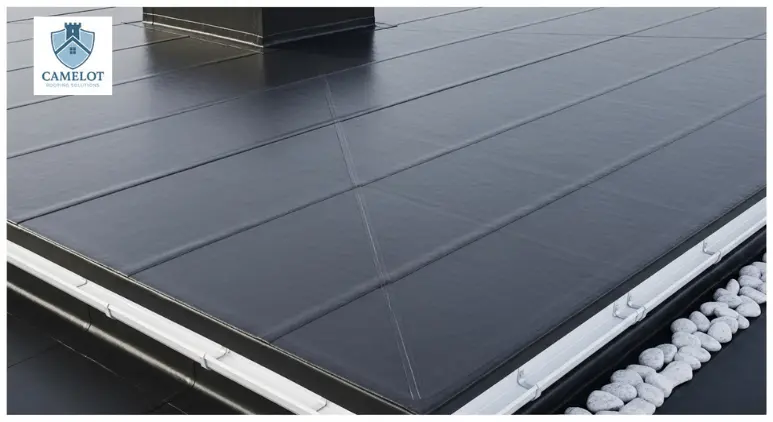
EPDM (Ethylene Propylene Diene Monomer) is a single-ply rubber membrane that has become the most popular flat roofing material for UK domestic extensions and outbuildings over the past 20 years. And with good reason, it is genuinely excellent.
- Cost: between £50 and £125 per square meter for supply and installation, with an average professional installation around £80 per square meter
- Lifespan: 30–50 years+
Pros:
- Outstanding durability, extraordinarily resistant to UV, ozone, and extreme temperature changes
- Excellent flexibility, remains pliable in freezing conditions without cracking
- Seamless installation possible on smaller roofs, eliminating the most common leak points
- Simple and inexpensive to repair if ever punctured
- Eco-friendly, made from recycled rubber
- Genuinely excellent value over its service life
Cons:
- Black colour absorbs solar heat, can increase roof space temperatures in summer
- Not the most elegant appearance on visible roofs
- Requires adhesive bonding to perimeter and penetration details, workmanship quality is critical
9. GRP Fibreglass Roofing
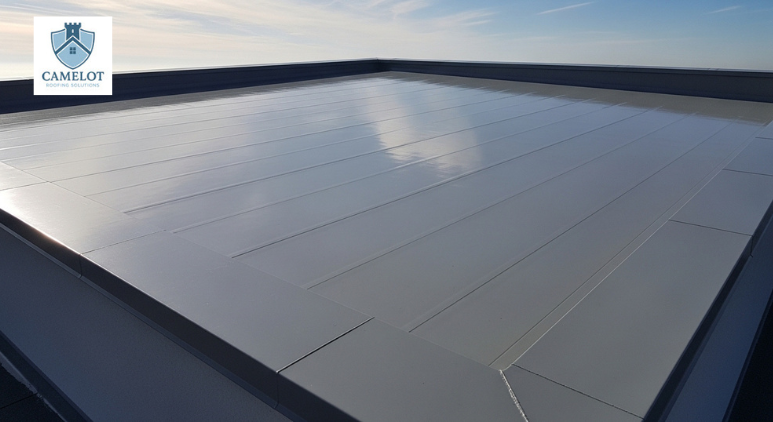
GRP (Glass Reinforced Polyester) fiberglass roofing has become the single most popular flat roofing system for domestic extensions and porches in the UK. It is applied as a liquid, curing to form a rigid, seamless, completely waterproof shell, much like the hull of a fiberglass boat.
- Cost:between £80 and £150 per square metre
- Lifespan: 25–40 years
Pros:
- Completely seamless, no joints, laps, or seams whatsoever
- Extremely strong and rigid, it can bear foot traffic without damage
- Available in a range of colours and can be finished to look like lead or felt
- Fast installation, typically completed in a single day for a domestic extension
- Very popular with UK builders and contractors, widely available and well understood
Cons:
- Requires dry conditions and appropriate temperature for installation (no application below 5°C)
- Rigid nature means it can crack if the roof deck moves significantly, good deck preparation is essential
- Not ideal for very large flat areas (>200m²) without movement joints
10. Solar Roof Tiles
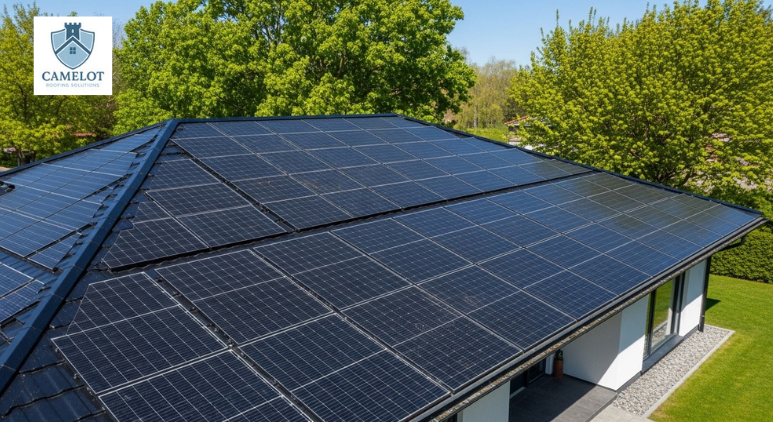
Solar roof tiles represent the most exciting development in UK residential roofing in a generation, a complete, integrated system that simultaneously waterproofs your home and generates clean electricity.
How They Differ from Solar Panels: Traditional solar panels are bolted onto your existing roof as a separate structure. Solar tiles replace your roof covering entirely, every tile you see is both your weatherproofing layer and your electricity generator. The result is a far cleaner, more architecturally integrated appearance.
- Cost:£300 to £450 per square metre
- Lifespan: 25 to 40 years
Pros:
- Generates clean electricity, can significantly reduce or eliminate electricity bills
- Qualifies for Smart Export Guarantee (SEG) payments, sell surplus electricity back to the grid
- Sleek, integrated appearance, far more attractive than rack-mounted panels
- May qualify for 0% VAT on installation under current UK green energy incentives
- Strong long-term ROI for homes with high electricity consumption and good southerly orientation
Cons:
- Very high upfront cost, the most expensive roofing option available
- Long payback period, typically 15–25 years in the UK, given lower solar irradiance than southern Europe
- Limited availability of qualified installers outside major cities
- Performance depends heavily on roof orientation and shading, not suitable for north-facing roofs
- Technology is still evolving, with fewer long-term UK case studies than traditional materials
Best For: Eco-conscious homeowners with southerly or south-westerly facing roofs, high electricity consumption, and a long-term horizon who want to combine roof replacement with clean energy generation.
11. Green / Living Roofs
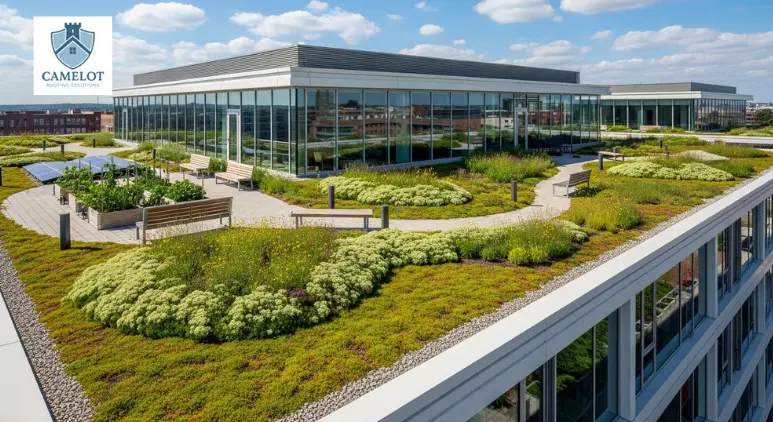
Green roofs, also known as living roofs or sedum roofs, incorporate a waterproof membrane, drainage layer, growing medium, and living vegetation into a single roofing system. Far from being an exotic novelty, green roofs are well established in the UK, particularly on flat-roofed extensions, garden offices, and commercial buildings, and are increasingly encouraged by local planning authorities as part of sustainable urban drainage schemes.
Two Main Categories:
Extensive Green Roofs-Shallow growing medium (60–150mm), planted with drought-tolerant, low-maintenance species such as sedum, mosses, and native wildflowers. Lightweight, lower cost, minimal maintenance. The standard choice for domestic flat roofs.
Intensive Green Roofs– Deeper growing medium (150–1,500mm+), supporting a much wider range of plants, including shrubs, small trees, perennial planting, and even vegetable growing. Essentially a rooftop garden. Significantly heavier, considerably more expensive, and requiring regular horticultural maintenance.
- Cost:between £50 and £200 per square metre (m²) for materials and installation
- Lifespan: 30 to 50 years.
Pros:
- Outstanding thermal insulation reduces heating costs in winter and cooling costs in summer
- Manages stormwater runoff naturally significant value in urban areas with pressurised drainage systems
- Supports biodiversity provide excellent habitat for birds, bees, butterflies, and invertebrates
- Actively encouraged by many UK local planning authorities for new builds and extensions
- Protects the waterproof membrane from UV degradation and temperature extremes, extending its service life considerably
- Visually attractive and transforms a flat roof into something genuinely beautiful
Cons:
- Heavier than other flat roof systems and structural assessment required
- Higher upfront cost than conventional flat roofing
- Extensive systems require modest maintenance
- Intensive systems require regular and skilled horticultural maintenance
- Must be combined with a high-quality waterproof membrane like GRP or EPDM recommended as the base system
Best For: Flat-roofed extensions, garden offices, garages, and urban buildings where sustainability credentials, planning requirements, or simply a love of nature make a living roof the obvious choice.
12. Thatch Roofing
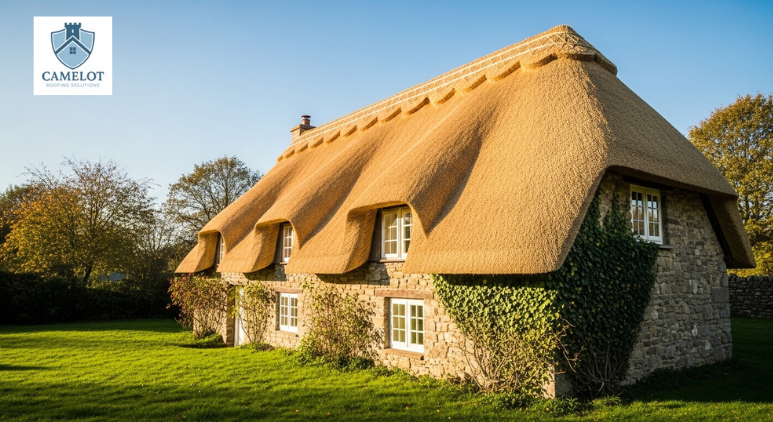
Thatching is one of Britain’s oldest and most distinctive craft traditions. An estimated 60,000 thatched properties remain in the UK today, the largest concentration of thatched buildings in the world outside of Asia, most of them in the West Country, East Anglia, and the rural Midlands.
- Cost: £145 – £210 per m² (depends on roof complexity, material, and access).
- Re-thatch Cost: £80 to £140 per m²
Pros:
- An irreplaceable aesthetic, nothing else looks like a well-maintained thatched roof
- Outstanding natural insulation, exceptional thermal performance
- Fully biodegradable and made from natural materials with very low embodied energy
- Deeply valued by the heritage sector, estate agents, and holiday let operators
- Listed building consent and conservation rules generally require thatch to be maintained on thatched properties
Cons:
- Very high cost, both material and skilled master-thatcher labour
- Fire risk, specialist fire retardant treatments are strongly recommended and required by most insurers
- Specialist maintenance only, master thatchers are a limited resource
- Ridge typically requires replacement every 10–15 years
- Higher building insurance premiums
- May harbour mice, birds, and insects without proper netting and maintenance
Best For: Listed thatched properties (often a legal requirement to maintain), heritage buildings, luxury rural retreats, and homeowners who actively love and value Britain’s thatching tradition.
13. Polycarbonate Roofing
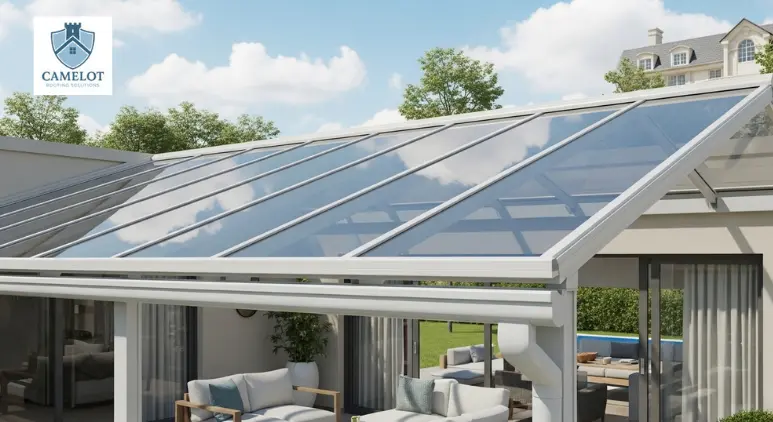
Polycarbonate is a robust, transparent or translucent thermoplastic panel used where natural light transmission through the roof is the primary design requirement. It is dramatically stronger than glass, considerably lighter, and far easier to handle and cut on site.
Types:
Twin-Wall Polycarbonate: Two transparent sheets with internal channels. Better insulation than single-skin. Standard for conservatories and lean-to roofs.
Multi-Wall Polycarbonate: Three or more layers for improved thermal performance. Better suited to year-round habitable spaces.
Solid Polycarbonate Sheet: Single-thickness, maximum light transmission. Used for carports, pergolas, and industrial rooflights.
- Cost:£15 to £50+ per square metre (material and installation depending on specification)
- Lifespan:10 to 20 years
Pros:
- Excellent natural daylight transmission transforms covered spaces
- Much lighter than glass, easier to handle and install
- High impact resistance
- UV-coated versions protect against harmful rays while maintaining visible light transmission
- Suitable for complex curved profiles
Cons:
- Not suitable as a primary roofing material for a full domestic roof
- Can yellow and lose clarity over time with prolonged UV exposure
- Poor thermal insulation compared to tiled or slate roofs
- Can be noisy in heavy rain, a consideration for habitable conservatories
Best For: Conservatories, lean-to extensions, carports, garden canopies, pergolas, greenhouses, and commercial rooflights.
If you’re still unsure which type of roofing material is best for your property. Contact our experienced roofers in Hackney to help you choose the right roofing material for your home, provide accurate quotes, and ensure your roof is installed to the highest standard.
Different Types of Roofing Materials: Detailed Comparison
| Material | Lifespan | Cost (£/m²) | Pros | Cons | Best For |
| Asphalt Shingles | 15–30 yrs | 30–85 | Longest-lasting, fireproof, low-maintenance, premium appearance | Shorter lifespan than tiles/slates, less common in the UK | Garden rooms, log cabins, American-style builds |
| Wood Shingles/Shake | 30–50 yrs | 50–100 | Natural, unique aesthetic, good insulation | High maintenance, prone to rot/mould, limited installers | Rural/heritage properties |
| Concrete Tiles | 30–50 yrs | 75–150 | Affordable, weather-resistant, widely available | Heavier, shorter lifespan than slate/clay | Most UK new builds, re-roofing projects |
| Clay Tiles | 50–100 yrs | 125–275 | Traditional aesthetic, durable, fire-resistant | Heavy, expensive, minimum pitch required | Period properties, conservation areas, listed buildings |
| Natural Slate | 75–200 yrs | 60–150+ | Period properties, conservation areas, and listed buildings | High upfront cost, requires skilled installers, brittle under foot traffic | Premium homes, heritage properties, conservation areas |
| Fibre Cement Slate | 50–60 yrs | 18–30 | Affordable, consistent dimensions, frost/fire resistant | Less character than natural slate, shorter lifespan | Budget slate alternatives, new builds |
| Metal Roofing (Zinc, Lead, Copper, Aluminium, Steel) | 40–70 yrs | 70–150 | Durable, lightweight, low maintenance, long-lasting | Higher upfront cost, thermal expansion, skilled installers needed | Modern homes, barn conversions, heritage restorations, coastal properties |
| EPDM Rubber Roofing | 30–50 yrs | 50–125 | Flexible, UV/temperature resistant, eco-friendly | Appearance not as attractive, black absorbs heat | Flat roofs, extensions, garden rooms |
| GRP Fibreglass Roofing | 25–40 yrs | 80–150 | Seamless, strong, fast installation, rigid | Requires dry conditions, can crack if deck moves | Flat roofs, porches, domestic extensions |
| Solar Roof Tiles | 25–40 yrs | 300–450 | Generates electricity, sleek appearance, reduces energy bills | Very high upfront cost, long payback period, depends on roof orientation | Eco-conscious homeowners, south-facing roofs |
| Green/Living Roofs | 30–50 yrs | 50–200 | Insulating, stormwater management, biodiversity, visually attractive | Heavier, higher cost, maintenance required | Flat roofs, garden offices, urban sustainable buildings |
| Thatch Roofing | 50+ yrs | 145–210 | Heritage aesthetic, natural insulation, biodegradable | Very high cost, fire risk, specialist maintenance | Listed/heritage buildings, rural retreats |
| Polycarbonate Roofing | 10–20 yrs | 15–50 | Lightweight, natural light, impact resistant | Poor thermal insulation, not for primary domestic roof | Conservatories, pergolas, carports, garden offices |
Key Factors to Consider Before Choosing a Roofing Material
1. Climate and Weather: This is the single most important factor. Heavy-snow regions need materials that withstand freeze-thaw cycles. Hot, sunny climates benefit from reflective or heat-resistant materials. Coastal areas need resistance to salt air and humidity.
2. Roof Pitch (Slope): Some materials like clay tiles and slate require a steeper slope to drain properly. Flat roofing materials like EPDM and TPO are designed specifically for low-slope applications.
3. Budget: A cheaper material upfront may cost far more over 20 years if it needs frequent repairs or early replacement. Calculate the true cost over the expected lifespan.
4. Structural Capacity: Heavy materials like slate and clay tile may require structural reinforcement. Always consult a structural engineer before choosing a heavy material.
5. Planning Permission and Conservation Area Rules: In a conservation area, a National Park, or if your property is listed, you may be legally required to use specific materials, often natural slate or clay tiles, matching the original character of the building. Always check with your local planning authority before proceeding.
6. Maintenance Tolerance Some materials need very little care; others require annual inspections, resealing, or treatments.
7. Environmental Goals If sustainability matters to you, materials like metal (recyclable), solar tiles, and green roofs offer eco-friendly benefits.
Conclusion
Choosing the right roofing material affects durability, aesthetics, energy efficiency, and home value. From traditional clay and slate to modern roofing materials like metal, solar, and green roofs, each option serves a different purpose.
Need guidance on selecting the perfect roofing solution? Consult with roofing experts in Hackney to provide professional advice, tailored recommendations, and high-quality installation you can rely on.
FAQs
What is the longest lasting roof material?
Natural slate is the longest lasting roofing material. A properly installed slate roof can last 75–200 years, making it the most durable and low-maintenance roofing option for homes.
What roofing material is best for the UK climate?
The best roofing materials for the UK climate are natural slate, clay tiles, concrete tiles, and metal roofing because they are highly durable and resistant to rain, wind, and frost.
Which type of roof is strongest?
Metal roofing and natural slate roofs are considered the strongest roof types. They offer excellent durability, weather resistance, and protection against strong winds, rain, and extreme conditions.
What is the cheapest roofing material in the UK?
The cheapest roofing material in the UK is usually fiber cement slate or asphalt shingles, costing around £8–£30 per m² for materials. These options are affordable, lightweight, and widely used for budget-friendly roofing projects while still offering reasonable durability.
